

Unpacking the Call to “Come out of Babylon” Part 1
We are setting off on a three-part journey to unpack what it actually means to “come out of Babylon.”
Before we can heed the urgent call, we need be able to understand what it actually is. What does this ancient city even mean in today’s context? Because Babylon is not just an old pile of bricks or a boring old story. It is a blueprint that still largely directs the building of our world today.
(If you haven’t read the prophetic word “Come out of Babylon”, read here.)
The upcoming series
Grasping this background helps us see how easily we can get caught up in these systems, how to spot them in our own lives, and why God calls us to step away from them. So truly understanding this DNA of Babylon is important!
We will do this in 3 separate posts. Through this series, we will be exploring the three faces of Babylon in the Bible:
Post 1 – Babylon of Genesis (this post): Building in the Beginning.
Post 2 – Babylon of the Exile: The oppressive worldly systems that destroyed and exiled Jerusalem.
Post 3 – Babylon of Revelation: The ultimate spiritual system, weaving right through Scripture and showing up in our modern world today.
Through it all, God’s grace has continued to follow humanity without fail. Between the gentle invitations, the words of warning through the prophets, and the constant pictures of hope, the call to come out of these worldly systems was always evident. He never gave up on them, nor has He given up on us. The same call continues to sound today!
So, let’s start at the very beginning, a very good place to start…all the way back to Genesis.
The Babylon of Genesis – The Dawn of Civilisation
Our story starts roughly 300 years after the great flood of Noah; we find ourselves at the scene of the infamous Tower of Babel.[1] Remember, leading up to this point, humanity was basically wiped out, and now had to repopulate from scratch. Noah and his family had only stepped out of the ark a few centuries prior. The people weren’t immediately running around building massive kingdoms or empires. Instead, they would have lived in family tribes, building in communities, while they were still growing as a people. Building a kingdom or having a king was not something that they had done…yet.
Then along came Nimrod.
The man behind the city. Nimrod “became a mighty warrior on the earth…the first cities of his kingdom were Babylon, Uruk, Akkad and Kelneh, in Shinar (Babylonia)” (Gen 10:8-10), so the Bible tells us. Historians actually agree that the region of Sumeria (lands mentioned above) is where human civilisation stemmed from. Meaning, the cultural blueprint, set right here in the time of Babel, became the ultimate template — copied, pasted, and repeated, all the way through human history! This is why it is worth getting to know a little bit about this man identified as the first king, in both biblical and Sumerian history. He has a greater influence on our world today than we probably realise.
Nimrod was obviously a mighty leader and impressive hunter and warrior. However, as we look closely, we notice the fruit of his works is not as impressive as his abilities. The Bible tells us that he is the man behind the lands of Shinar (Babylonia), Assyria, Ninevah, and many others. This tells us something about him because these were all lands of rebellion! Ancient Sumerian texts even describe him as an ambitious, ruthless tyrant. One who centralised power, dominated neighbouring cities, and controlled the entire Plain of Shinar (Babylonia).[2]
This is what became the blueprint of kingdom building here on the earth. Systems built in human strength, through intellect and military might. These systems were, and still are, structures that see humankind try to elevate ourselves to God’s status. All while in rebellion to Him! It seems we never had a chance, doesn’t it?
So, what were these early empire-builders thinking?
In Genesis 11:4, they said:
” ‘Come, let us build ourselves a city, with a tower that reaches to the heavens, so that we may make a name for ourselves; otherwise we will be scattered over the face of the whole earth.’”
On the surface, it sounds like a pretty acceptable architectural project. But behind it, the driving factor was a fierce spirit of rebellion and a desire for glory. Because, they weren’t just building a tall building. They were most likely building a ziggurat.[3]
Building the Ziggurat
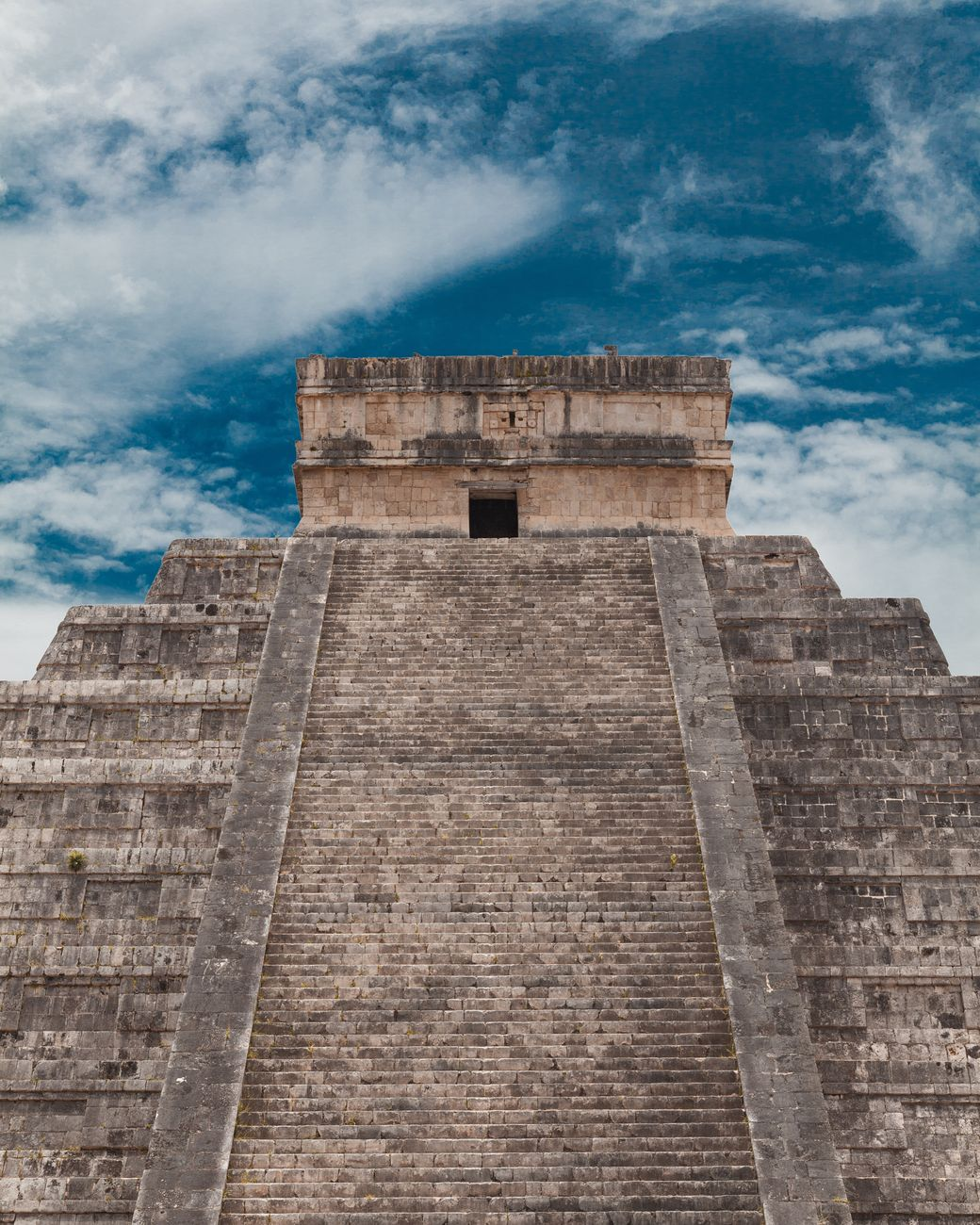
A ziggurat is a stepped pyramid-type of structure. At the top of a ziggurat was a sacred room believed to be the dwelling place of gods. The diety’s would reside up there when coming into the physical realm.[4] This wasn’t just about the people seeking divine favour — the people were trying to gain their own access to the divine. Without God! Ultimately, making themselves equal to the Creator (doesn’t that sound familiar to the eating of the forbidden fruit in Eden!).
The Bible tells us that in Hebrew, the word Babel speaks of confusion[5]— the exact consequence God brought when He confused their languages! But the interesting thing is, in the ancient Akkadian language, Babel means Gateway of the Gods. Which is exactly what they tried to build![6] The tower was designed to be a portal between the physical and spiritual realms — a place to receive divine secrets, hidden wisdom, and supernatural power. Much like the forbidden knowledge the fallen angels originally peddled before the great flood, in old Hebrew belief.[7] And so, we see it was humanity reaching for the throne once again.
God calling them out in Genesis
Amongst it all, God’s goodness is evident the entire way through. He was always calling His people out of these systems, while pointing the way out for them. Just as He is again today.
God spoke to Abraham (then Abram) In Genesis 12:1, saying, “Go from your country, your people, and your father’s household to the land I will show you.[8]” Right here, Abraham receives the very call we have been talking about. The call to come out of the systems of Babylon. To leave behind every familiar cultural system, and step out in faith. In return, God promised to build a very different kind of kingdom through Abraham’s family. They would become a people set apart from the rest of the world, showing what it looks like to live according to heaven’s systems, rather than Babylon’s.
Through Abraham came Isaac, Jacob (Israel), Moses, and the line of David — ultimately leading us to Jesus. All Abraham had to do was trust God’s ways as He drew him into a new system. Abraham chose to leave behind all that he had been used to; the systems he had known his entire life. That one step of faith had such a huge impact on the entire story of history! Just imagine what would have happened if he decided to stay amongst the systems of the world.
But unfortunately, the story doesn’t end there — it isn’t quite as clean cut as that. As you and I both know, being immune to the systems of the world is easier said than done! God knew the people would fail. He even gave instructions to help them navigate the worldly systems without falling into their traps. Yet alas, they failed that too. (Hence the need for Jesus, our saviour!) So we can be encouraged, because God still made a way. Hope was never lost. And today, God is still giving us directions, showing us how to untangle from Babylon as well. Even if we have failed time and time again. All we have to do is decide whether we want to be like Abraham, and heed the call.
Today, my heart is simply to be obedient and sound the trumpet call: “Come out of Babylon.”
What Does This Mean for Us Today?
Nothing caught God by surprise. He knew the inevitable twists and turns before the foundations of the earth were even laid. Yet, His desire has never changed. He still continues to make a way for every single human being to come back into genuine relationship with Him.
Reflective Questions
So, this is an invitation to pause, pour another cuppa, and ask the Holy Spirit some brave questions:
- Lord, where are you nudging me to step away from the world’s systems and take up your yoke instead?
- Where am I quietly entangled in this empire-building, self-reliant mindset in my daily life?
- Are there any areas of my life where I am blinded to the worldly systems?
For now, I encourage you to simply ponder these things. Allow God to speak to you in the quiet place. Because in our next post, we are going to look at the Babylon of the Exile — and see how these very same patterns show up much closer to home than we might think.
See you in the next post!
Mari xx
[1] The Tower of Babel was built in Shinar (Genesis 11:2), also known as Babylonia.
[2] The Nimrod of Sumerian legend was an ambitious, authoritarian ruler who gained control of other cities and territories. This would agree with the biblical description of Nimrod as a great warrior (Gen 10:8). Ron Allen: Babylon: A Spiritual Journey Through Times and Nations
[3]“Ziggurats were central to the religious and cultural life of Mesopotamian cities. They were believed to be the dwelling places of the gods, serving as a bridge between the heavens and the earth. Each city-state typically had its own patron deity, and the ziggurat was dedicated to that god or goddess. The most famous ziggurat is the Etemenanki of Babylon, which is often associated with the biblical Tower of Babel.” https://biblehub.com/topical/z/ziggurats.htm
[4] https://www.worldhistory.org/ziggurat/
[5] https://bibledictionarytoday.com/places/babel/#google_vignette
[6] https://www.abarim-publications.com/Meaning/Babel.html
[7] The book of Enoch is an ancient Hebrew text that tells of Watchers, which were angels, that came to earth, shared heavenly secrets, and procreated with women – creating the Nephilim. The book of Enoch is referenced and even quoted in the Bible.
[8] God was calling Abraham out of Ur, which was a city deeply steeped in the systems of Babylon.


Leave a Reply